
How Much Is a 1 Oz Gold Coin Worth Find Top Buyers and Sell Gold Locally
A 1 oz gold coin can feel simple to value, until the offers start coming in. One buyer quotes near the live gold price. Another talks about rarity. A third subtracts fees, assay risk, and resale margin. The same coin can produce several different numbers, and not all of them are fair.
The short answer is this: a one ounce gold coin is usually worth at least the value of one troy ounce of gold, adjusted for purity, condition, demand, and the buyer’s spread. Some coins sell mostly as bullion. Others carry a collector premium that can place them above melt value.
This guide explains what affects the price, how to think about gold bullion, and how to find reputable local buyers if selling in the Keller, Texas area or nearby parts of North Texas. This is general information, not financial or tax advice.

What a 1 oz gold coin is really worth
A 1 oz gold coin is priced around the spot price of gold, but spot price is only the starting point. Spot price refers to the current market price for one troy ounce of pure gold. Gold trades globally, and the price can change throughout the day.
A troy ounce is not the same as a standard household ounce. One troy ounce equals about 31.103 grams. Most major gold bullion coins contain one troy ounce of pure gold, even when the total coin weight is higher because the coin includes small amounts of alloy metal.
For example, an American Gold Eagle is 22 karat gold, but it still contains one full troy ounce of pure gold. Its total weight is higher because copper and silver are added for durability. A Canadian Gold Maple Leaf and American Gold Buffalo are typically 24 karat gold and closer to pure gold by total composition.
When someone asks, “How much is a one ounce gold coin worth?” the practical answer is:
Live gold spot price, plus or minus any bullion premium, collector premium, condition adjustment, and buyer margin.
That means a coin may sell for:
Near spot price if it is a common bullion coin in average condition
Above spot price if demand is strong or the coin is highly recognized
Well above spot price if it has numismatic value
Below full retail value if sold quickly to a dealer who must resell it
Dealers do not usually pay full retail. They buy at a price that allows room for verification, inventory risk, and resale profit. That spread is normal. The goal is to make sure the spread is fair.
The main factors that influence a gold coin’s value
Several forces shape the final offer for a 1 oz gold coin. Some are market-based. Others are specific to the coin in hand.
Factor | How it affects value | What to check |
Gold spot price | Sets the base bullion value | Live gold price on the day you sell |
Purity | Confirms how much pure gold the coin contains | Karat, fineness, and coin specifications |
Coin type | Popular coins often bring stronger offers | Mint, year, and recognition |
Condition | Damage can reduce appeal, while excellent condition may help | Scratches, cleaning, dents, packaging |
Collector demand | Rare dates and special issues can sell above melt | Mintage, grading, and market demand |
Buyer spread | Dealers pay below resale value to cover business costs | Compare multiple offers |
Market trends move the baseline
Gold often attracts attention during inflation concerns, banking stress, geopolitical uncertainty, or periods when investors want tangible assets. When demand rises, bullion premiums may also rise. When selling pressure increases or demand cools, premiums can shrink.
This does not mean every coin gains the same way. A common bullion coin mainly follows the spot price. A collectible coin may follow a different path because rare coin buyers care about more than gold content.
Gold purity matters
Gold purity is usually shown as karat or fineness.
24 karat Nearly pure gold, often marked as .999 or .9999 fine
22 karat Contains gold plus alloy metals for strength, often used in durable bullion coins
90% gold Common in many older U.S. and world coins, but these may not contain a full ounce of gold unless specified
For a true 1 oz bullion coin, the key is whether it contains one troy ounce of actual gold content. Do not rely only on total coin weight. A coin can weigh more than one troy ounce and still contain exactly one troy ounce of gold.

Collector demand can add a premium
Some coins sell for their metal value. Others carry a numismatic premium because collectors want them.
Collector demand can depend on:
Low mintage
Historic significance
Unusual date or mint mark
Original government packaging
Third-party grading
Strong visual appeal
Limited edition releases
A graded coin sealed in a holder from a respected grading service may need a different selling approach than a loose bullion coin. If a buyer only offers melt value for something with collector demand, it may be worth getting another quote.
Condition still counts
Bullion coins do not need to be perfect to retain gold value. Gold content remains the gold content. Still, condition can influence resale demand.
Avoid cleaning a gold coin before selling. Cleaning can leave fine scratches and reduce collector value. If the coin is in a capsule, holder, or original packaging, leave it there until a knowledgeable buyer examines it.
How gold bullion differs from collectible gold coins
Selling gold bullion is usually more straightforward than selling rare coins. Bullion buyers focus on weight, purity, authenticity, and current market price. Collectible coin buyers also consider grade, scarcity, and buyer demand.
A bullion transaction often moves quickly. A buyer tests the coin, checks the day’s market, and makes an offer tied to spot. A collectible transaction may take longer because the coin needs more research.
Here is a simple way to separate the two:
Bullion-focused coin
Collector-focused coin
Value mostly tracks the gold spot price. Common examples include current-year government bullion coins and widely traded investment coins.
Value may exceed gold content due to rarity, grade, age, or demand among collectors. Older coins and low-mintage issues often fit here.
If you are unsure which type you have, do not assume. Search the coin’s exact year, mint, denomination, and markings. Better yet, get more than one professional opinion before selling.
How to find reputable gold coin buyers
A reputable buyer should make the process clear. They should be willing to explain how they calculate the offer, what tests they use, and how the current gold price affects the number.
Look for buyers who:
Have a physical location and established local presence
Explain their pricing in plain language
Test coins in front of you when possible
Use non-destructive testing methods when appropriate
Provide a written offer or receipt
Do not pressure you to decide immediately
Understand both bullion and collectible coins
Have consistent customer reviews across multiple sources
Be cautious if a buyer refuses to discuss spot price, weighs coins out of sight, uses vague language, or pushes a “today only” offer. A fair buyer knows sellers often compare quotes.
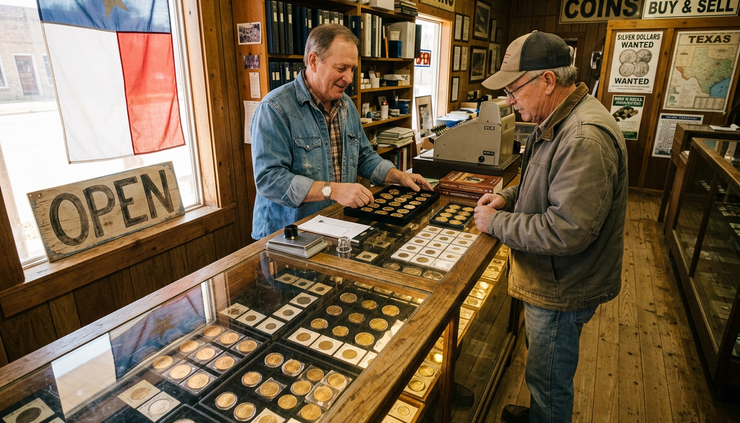
For local sellers, convenience matters, but it should not replace trust. If you are Selling a 1 Oz Gold Coin in Keller Texas, start with nearby coin shops, precious metal dealers, and established gold buyers in Keller, Southlake, Watauga, North Richland Hills, and the greater Fort Worth area. A short drive can sometimes produce a better offer, especially for a coin with collector value.
Where to sell gold coins locally
Local selling gives you the advantage of face-to-face evaluation. It also lets you compare offers without shipping a valuable item.
Common local options include the following.
Coin shops
Coin shops are often the best first stop for gold coins because they understand both bullion and numismatic value. A good coin shop can tell you whether the coin is common bullion or something that deserves a collector-level offer.
Precious metal dealers
Precious metal dealers focus on gold, silver, platinum, and related products. They tend to be efficient for bullion coins and bars. Their pricing often follows spot closely, with a clear buy-sell spread.
Jewelry stores that buy gold
Some jewelry stores buy coins, but their main business may be jewelry, not bullion or rare coins. They can be convenient, but compare their offer with a coin-focused buyer before selling.
Pawn shops
Pawn shops may buy gold coins, but offers can vary widely. Some have strong precious metal knowledge. Others price conservatively because they need quick resale room. Use them as one comparison point, not the only one.
Local coin shows
Coin shows can be useful for collectible gold coins because several dealers may be in one place. This can help you test demand quickly. For common bullion, a coin show may still work, but a local dealer may be faster.
How to prepare before you ask for offers
A little preparation can improve the selling experience and help you spot weak offers.
Start by identifying the coin. Write down:
Country
Year
Denomination
Mint mark, if any
Stated purity
Weight or known gold content
Any certificate, capsule, box, or grading holder
Next, check the live gold spot price close to the time you plan to sell. You do not need to become a trader. You only need a current reference point so you can understand how the buyer reached the offer.
Then, inspect the coin without cleaning it. Note obvious scratches, rim dents, discoloration, or packaging. If the coin is sealed, do not open it unless a trusted expert explains why.
When visiting local buyers, bring identification. Many buyers are required to keep records for precious metal purchases. Ask how payment works before agreeing to sell. Some buyers pay by check, some by electronic payment, and some may offer cash within legal limits.
A good question to ask is:
“Can you show me how this offer compares to today’s gold spot price and whether you are valuing this as bullion or as a collectible coin?”
That single question often reveals how knowledgeable and transparent the buyer is.
What to know about selling gold bullion
Gold bullion is liquid, which means it is generally easier to sell than many collectibles. Recognized government-minted coins often attract stronger buyer interest because they are easy to verify and widely trusted.
Still, selling bullion is not the same as getting the full retail price shown online. Retail prices often include dealer premiums, shipping, payment fees, and market demand. A local buyer’s offer will usually sit below the price they expect to resell the coin for.
To get a fair result:
Get at least two or three offers if time allows
Ask whether the offer changes with spot price during the day
Separate bullion coins from potential rare coins
Keep original packaging and grading holders intact
Avoid mailing coins unless you understand insurance, tracking, and settlement terms
For high-value collections, consider a formal appraisal or consignment option. For a single common 1 oz bullion coin, direct sale to a reputable local buyer may be the simplest path.

Frequently Asked Questions
How much is a one ounce gold coin worth?
A one ounce gold coin is usually worth close to the current spot price of one troy ounce of gold, adjusted for purity, demand, condition, and the buyer’s margin. Some collectible coins may be worth more than melt value.
Is a 1 oz gold coin always pure gold?
No. Some 1 oz gold coins are 24 karat, while others are 22 karat and include alloy metals for durability. Many 22 karat bullion coins still contain one full troy ounce of pure gold, even though the total coin weight is higher.
Should I sell my gold coin to a local buyer or online?
Local buyers offer speed, face-to-face testing, and no shipping risk. Online buyers may offer competitive pricing, but you need to understand shipping insurance, payment timing, and return policies. For many sellers, comparing local offers first is a smart start.
Can cleaning a gold coin increase its value?
No. Cleaning can reduce value, especially for collectible coins. Leave the coin in its current condition and let a qualified buyer or dealer evaluate it.
What is the best place to sell gold coins near Keller?
Start with established coin shops and precious metal buyers in and around Keller and nearby North Texas communities. Choose buyers who explain pricing clearly, test coins professionally, and provide written documentation.
The best sale starts with knowing what you own
A 1 oz gold coin has a strong built-in value because of its gold content. The final offer, though, depends on more than the metal alone. Spot price sets the baseline. Purity confirms the gold content. Coin type, condition, and collector demand can raise or lower the price.
Before selling, identify the coin, check the live gold price, and compare offers from reputable local buyers. If the coin is common bullion, focus on a fair spread from spot. If it may be collectible, slow down and get a second opinion.
The best buyer is not always the nearest one or the loudest one. It is the one who can explain the offer clearly and treat the coin with the care its value deserves.


Comments