
Selling Precious Metals What ID You Need and How You Get Paid
Selling gold, silver, platinum, or other precious metals should not feel unclear. A reputable buyer will ask for identification, inspect the items in front of you, explain the quote, and pay you through a method you approve.
At Keller Gold & Silver, the process is built around three things: compliance, transparency, and privacy. Here is what to bring, what happens during evaluation, and how payment works.
This article is for general information only. It is not legal or financial advice.

You need a valid government-issued photo ID
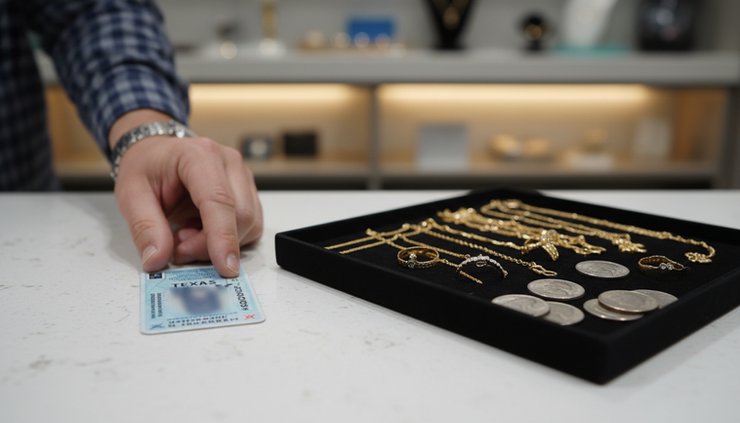
A valid government-issued photo ID is required when selling precious metals. This is standard practice for reputable buyers. It helps confirm that the seller is the person completing the transaction.
Common accepted forms of identification include:
Texas driver’s license
Texas state ID card
U.S. passport
Military ID
Other current government-issued photo ID
The ID should be current and readable. The name and photo must identify the person selling the items. If the ID is expired, damaged, or unclear, the buyer may not be able to complete the purchase.
This requirement is not just a store preference. Precious metal buyers must follow rules designed to prevent fraud and the sale of stolen property. State and local regulations often require dealers to record seller information, item descriptions, and transaction details.
That means a buyer may need to document:
The seller’s legal name
The type of ID shown
A description of the items sold
The date of the transaction
The agreed purchase amount
The seller’s signature or consent where required
Keller Gold & Silver follows these requirements to protect both sides of the transaction. Compliance helps keep the process legitimate. It also gives sellers confidence that they are working with a buyer that takes its obligations seriously.
State compliance protects sellers and buyers
Precious metals have high resale value. Gold jewelry, silver coins, bullion, watches, and flatware can be moved quickly if no verification process exists. That is why dealers must take identity and recordkeeping seriously.
Compliance serves a clear purpose. It helps law enforcement trace items when theft or fraud is reported. It also separates professional dealers from informal buyers who may skip basic protections.
For sellers, compliance creates a cleaner transaction. You know the buyer is following the rules. You also receive a documented quote and payment through an approved method. That matters if you are selling inherited items, estate pieces, old jewelry, or coins with collectible value.
A compliant process also helps prevent misunderstandings. When the buyer records what was reviewed and what offer was made, both sides have a clear account of the transaction.
A proper sale should never feel rushed or vague. If a buyer refuses to explain why ID is needed, will not describe how the items are evaluated, or avoids giving a clear offer, that is a warning sign.
At Keller Gold & Silver, ID verification is part of a secure and private transaction process. It is handled as a normal step, not as an inconvenience.
How precious metals are evaluated
The evaluation process should be direct. A buyer examines the items, checks metal content, weighs them, considers current market conditions, and gives a quote.
The exact steps depend on what you bring in. A gold chain is evaluated differently from a proof coin or a sterling silver tea set. A diamond ring may involve both metal value and gemstone review. A bullion coin may be valued close to its metal content, while a rare coin may carry collectible value beyond its melt value.
Here is what typically happens.
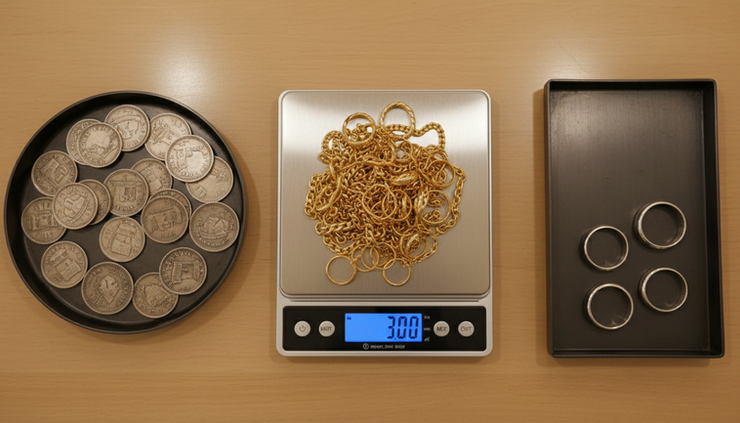
The items are sorted by metal type
Gold, silver, platinum, and palladium are evaluated separately. Mixed lots need sorting because each metal has a different market value.
Gold is also separated by karat. For example, 10K, 14K, 18K, and 22K gold contain different percentages of pure gold. A 14K gold bracelet does not have the same pure gold content as an 18K bracelet of the same weight.
Sterling silver is usually marked `925`, which means it contains 92.5% silver. Some items may be silver-plated, which has far less precious metal value. A proper evaluation helps separate solid precious metal from plated material.
The buyer checks markings and condition
Many items have stamps or hallmarks. These can show karat, silver content, maker, country of origin, or brand. A ring may be stamped `14K`. A silver bowl may be marked `Sterling`. A platinum band may show `PT950`.
Marks are useful, but they are not the only factor. Pieces can be worn, resized, repaired, or mislabeled. The buyer may use testing methods to confirm content.
Condition can also matter. Broken jewelry may still have strong metal value. Coins, watches, and collectible pieces may gain or lose value based on condition, rarity, demand, and authenticity.
The items are tested when needed
A professional buyer may use several tools to verify metal content. These can include:
Magnification
Magnet checks
Electronic testing
Acid testing where appropriate
X-ray fluorescence testing if available
Weight and density checks
Testing helps confirm whether an item is solid gold, gold-filled, plated, sterling silver, coin silver, platinum, or another material.
Good testing is careful. It should protect the item as much as possible while giving the buyer enough information to make a fair offer.
The items are weighed
Weight is central to most precious metal offers. Buyers use accurate scales and separate items by metal type and purity.
Precious metals are often priced by troy weight. A troy ounce is commonly used in the precious metals market. It is different from the standard ounce used for groceries and household goods.
If you bring a mix of items, the buyer may weigh each category separately. For example:
Item group | Why it is separated |
10K gold jewelry | Lower gold content than higher karat pieces |
14K gold jewelry | Common jewelry purity with a separate value |
Sterling silver | Different metal and market price |
Bullion coins | Often priced close to metal value |
Collectible coins | May need numismatic review |
This separation helps produce a quote that reflects the actual contents of the lot.
How the quote is calculated
After evaluation, the buyer gives a quote. The quote is based on several factors, not just the item’s appearance.
The main pricing factors include:
Metal type
Gold, silver, platinum, and palladium each have separate market prices.
Purity
Higher gold karat or higher precious metal content usually means higher value by weight.
Weight
Heavier items generally contain more metal, if purity is the same.
Current market price
Precious metal prices change during market trading. Offers reflect current prices at the time of review.
Resale or collectible value
Some coins, watches, bars, and signed pieces may be worth more than metal content.
Refining and resale costs
A buyer must account for testing, handling, refining, and market risk.
The price offered for jewelry is usually not the same as the public spot price of pure gold or silver. Spot price refers to pure metal in market form. Jewelry is often mixed with other metals for durability. A 14K gold ring contains gold, but not 100% gold. That affects the calculation.
A clear buyer should be able to explain the offer in plain terms. For example, the explanation may cover karat, weight, current metal price, and any collectible factors.
If some pieces have little or no precious metal value, the buyer should say so. Gold-plated jewelry, costume jewelry, and silver-plated serving pieces often have limited precious metal value compared with solid gold or sterling silver.
The best process is simple: inspect, test, weigh, explain, quote.
When selling precious metals, ask questions before accepting the offer. A good buyer will not object. The goal is a transaction that both sides understand.
How you get paid right away
Once you accept the quote, Keller Gold & Silver offers immediate payout options. The available method may depend on the transaction details, store policy, and any applicable legal requirements.
Common payout options include:
Payment option | Best for |
Cash | Sellers who want immediate funds for an eligible transaction |
Check | Sellers who prefer a written payment record |
Trade credit | Sellers who want to apply the value toward another item |
Cash is direct. It is often preferred for smaller eligible transactions where immediate payment is available.
A check gives a clear paper trail. Some sellers prefer it for higher-value transactions or estate-related sales where records matter.
Trade credit can be useful if you plan to buy coins, bullion, jewelry, or another item from Keller Gold & Silver. Instead of taking the full payout in cash or check, you can apply the value toward a purchase.
The key point is that the payment choice is discussed after the quote and before the transaction is finalized. You should know the amount and payment method before you agree to sell.
A professional buyer will not pressure you to choose one method without explanation. The final decision should be clear, documented, and handled securely.
Keller Gold & Silver provides a secure and private setting
Selling valuables is personal. The items may include inherited jewelry, family coins, old wedding bands, estate pieces, or bullion that took years to collect. The setting matters.
Keller Gold & Silver provides a secure and private environment for transactions. That means sellers can have their items reviewed without unnecessary exposure or distractions. Privacy also helps when discussing value, payment, and personal identification.
A secure process should include:
A controlled transaction area
Careful handling of items
Clear communication during evaluation
Private discussion of the quote
ID verification handled discreetly
Payment completed in a safe setting
This matters most when selling higher-value items. It also matters when the items have personal history. Sellers should not feel rushed, watched by unrelated customers, or pressured to make a fast decision.
Security is not only about locks and counters. It is also about procedure. A buyer should keep items organized, explain what is being tested, and make sure nothing is mixed up during evaluation.
If you bring multiple pieces, ask for them to be grouped clearly. For example, gold jewelry, silver coins, bullion, and watches can be kept in separate trays. This makes the review easier to follow.
What to bring before you sell
A little preparation can save time. It can also help the buyer evaluate the items more accurately.
Bring these items if you have them:
A valid government-issued photo ID
Gold, silver, platinum, or palladium items you want reviewed
Original packaging for bullion or collectible coins
Certificates of authenticity if available
Receipts or appraisal documents if you have them
Estate paperwork if the sale is connected to an estate
Any matching pieces, such as earring pairs or watch links
Do not worry if you do not have every document. Many items can still be evaluated based on testing, weight, and market value. Documents help most when the item may have collectible, brand, or estate value.
Avoid cleaning old coins before bringing them in. Cleaning can reduce collectible value. It is better to let the buyer review the coin as it is.
For jewelry, bring broken pieces too. A broken chain, single earring, damaged ring, or old class ring can still contain valuable metal.
You can also separate items at home, but it is not required. If you know which pieces are gold, sterling silver, or plated, keep them apart. If not, bring them in and let the buyer sort them.
Red flags to avoid
A trustworthy precious metals transaction should be clear from start to finish. Watch for signs that the process is not being handled properly.
Be careful if a buyer:
Refuses to ask for ID when required
Will not explain the testing process
Gives only a lump-sum offer with no context
Pressures you to accept immediately
Handles items out of sight without explanation
Will not discuss payment options
Avoids written documentation
Makes promises that sound too good to be true
A high offer means little if the process is unclear. Transparency matters as much as price. A serious buyer should explain what you have, how it was evaluated, and how you will be paid.
FAQ
Do I need a Texas driver’s license to sell precious metals?
A Texas driver’s license is commonly accepted, but it is not the only option. A valid government-issued photo ID, such as a passport or state ID card, may also work.
Why does Keller Gold & Silver need my ID?
ID helps verify the seller and supports compliance with state regulations. Precious metal transactions are subject to rules designed to prevent fraud and the sale of stolen property.
Will I get a quote before I agree to sell?
Yes. Your items are evaluated first. After testing, sorting, and weighing, you receive a quote. You can accept or decline it.
Can I get paid the same day?
Yes, immediate payout options may include cash, check, or trade credit. Availability can depend on the transaction and applicable requirements.
Does broken jewelry have value?
Often, yes. Broken gold, silver, or platinum jewelry can still have metal value. The buyer will evaluate it by metal type, purity, and weight.
The takeaway
Selling valuables should be simple, but it should also be secure. Bring a valid government-issued photo ID, such as a Texas driver’s license or passport. Expect the buyer to follow state compliance rules. Ask how your items are tested, weighed, and priced.
At Keller Gold & Silver, sellers receive a clear evaluation, a quote before they commit, and immediate payout options that can include cash, check, or trade credit. The process is handled in a private setting built for safe, professional transactions.



Comments